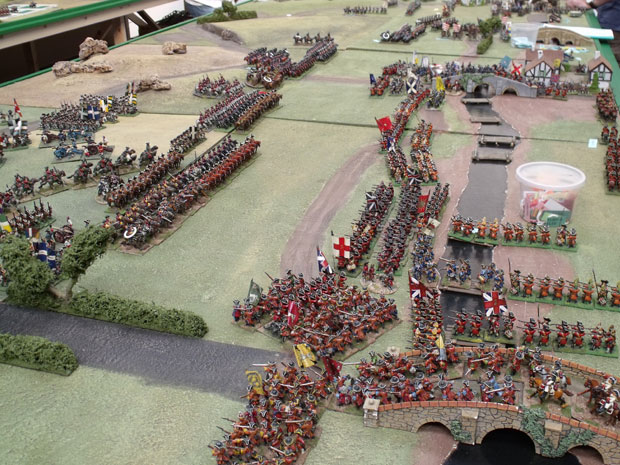
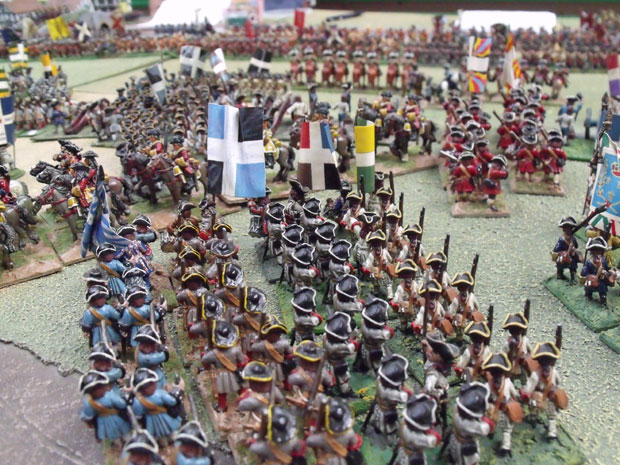
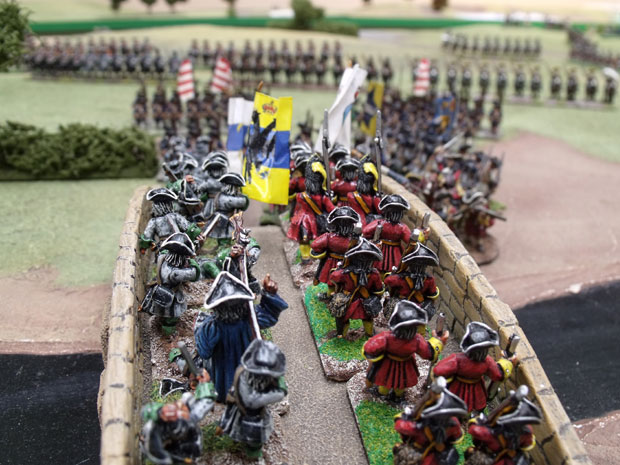
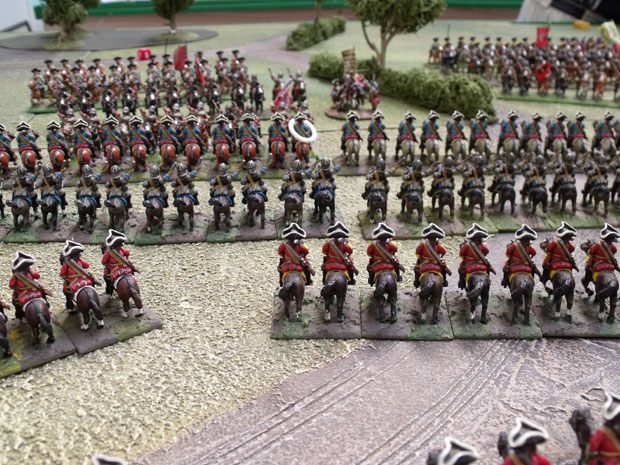
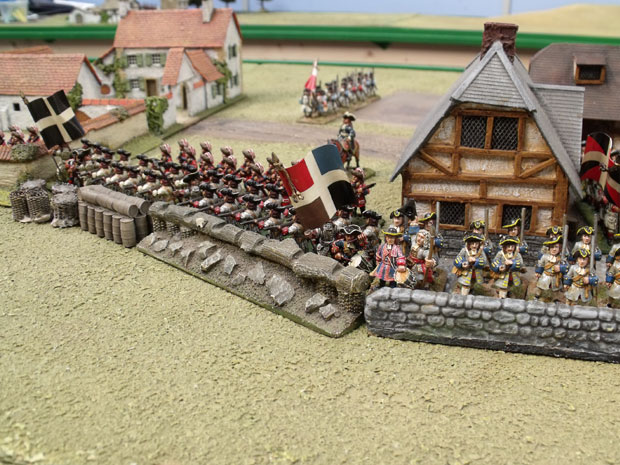
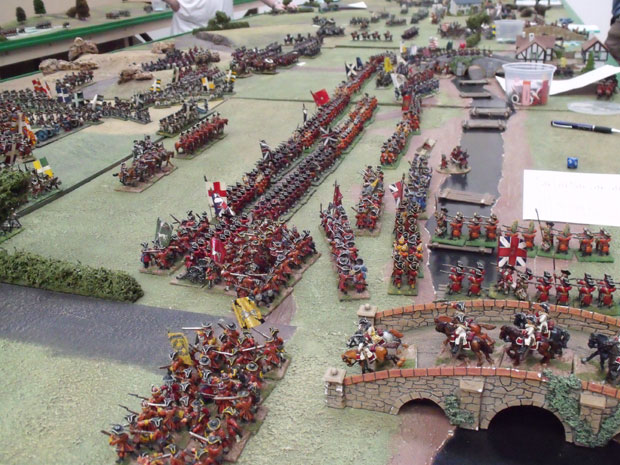
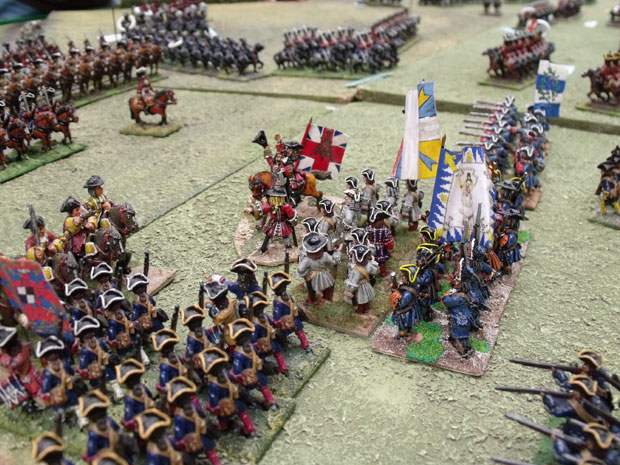
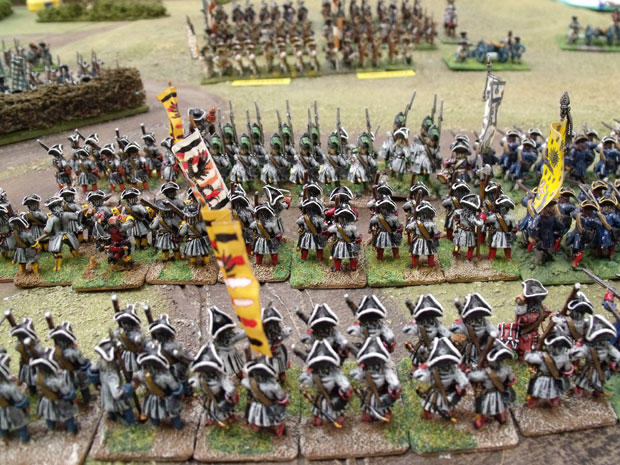
Fuentes D’Onoro 1811.

This weekend was to be our second foray into the Spanish peninsular! The French and the Allies were decided, the tactics discussed and the tiles laid out! Early on the first day the French under Marshal Massena began to probe the allied defensive line. We started the manoeuvreing on the first day of the battle, 3rd May.
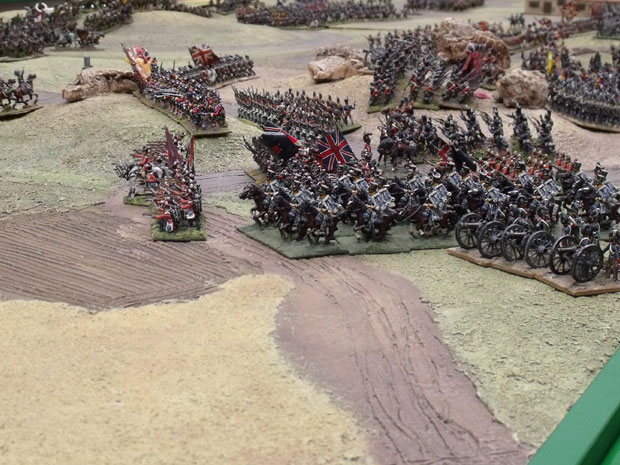
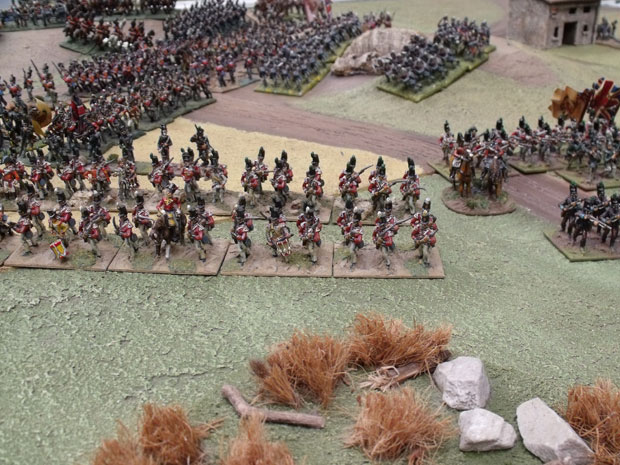
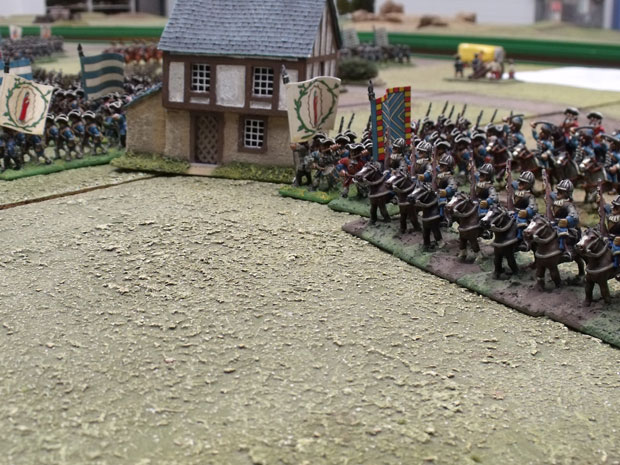
Kings German Legion Move out to engage the French Cavalry

The Kings German Legion manoeuvre into position.

The French pushed hard all along the Allied lines, they pressed the defenders of Fuentes d’Onoro ealt on but were repulsed with minor losses.
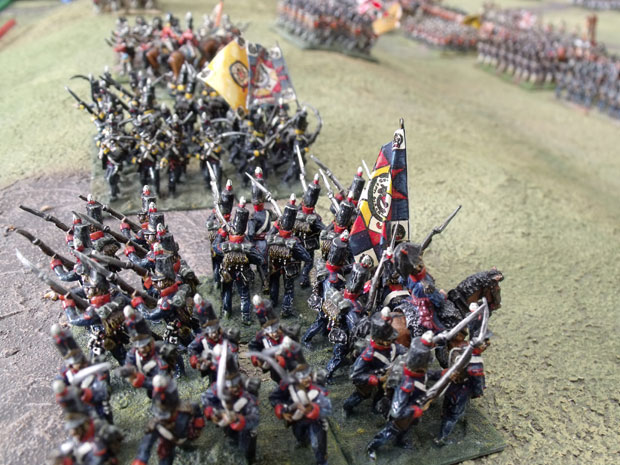
Portuguese in Square

Troops of the Portuguese division form square to defend against Montbrun’s cavalry.

The British moving the Portuguese Divisions out to the far right of their lines to attempt to prevent a sweeping flank move by Montbruns cavalry, which appeared to be moving en-masse to turn the allied right flank.
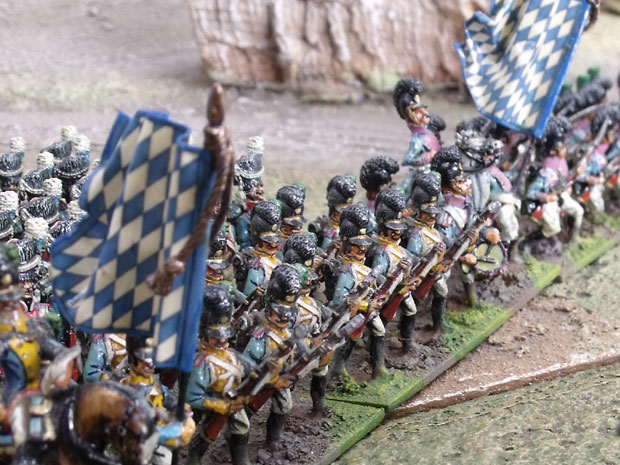
Some Pseudo Frenchmen

Some of our Bavarian troops utilised as french allies within the divisions of french infantry.

Outnumbered significantly the Portuguese Cavalry brigade did far better than anyone expected, one regiment of them routing a French Hussar regiment and then a Polish Lancer regiment from the field in quick succession.
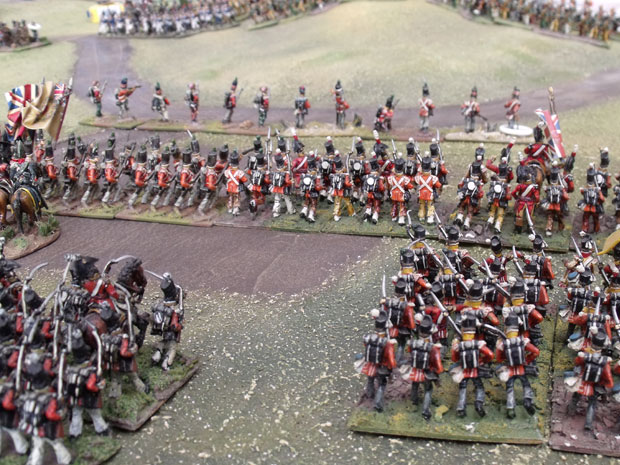
The British Divisions move to counterattack near Fuentes D'Onoro

British infantry moving to support the flank of Fuentes D’Onoro.

All along the front the Allied infantry poured fire into the advancing columns of French infantry. One British battalion got caught by Dragoons in line and were cut down mercilessly!
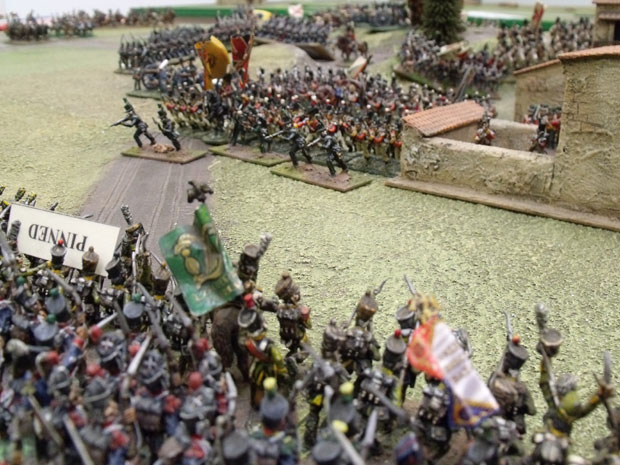
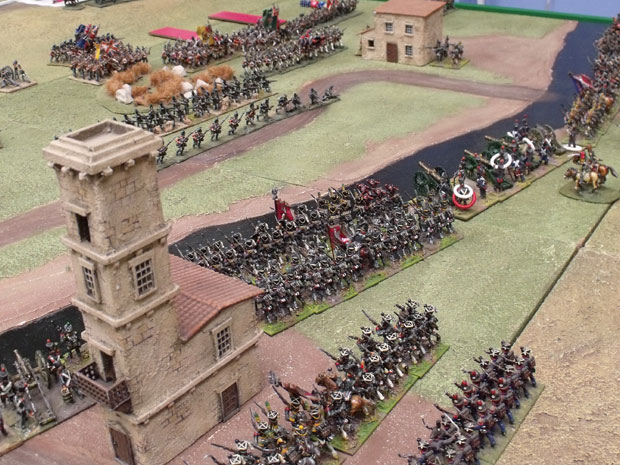
Across the river and up the slope to the village

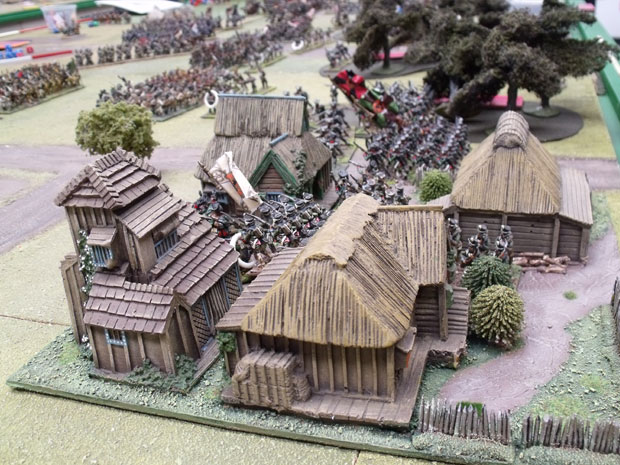
The first assault against the village of fuentes d’Onoro, this brave attempt was thwarted.

The Battle began to intensify and the French charged the ridge with the Highlanders tenaciously hanging on, disputing every inch of ground. Three rounds of combat saw the French repulsed, but the Highlanders were shattered albeit at the cost of three battalions of French first class line infantry.
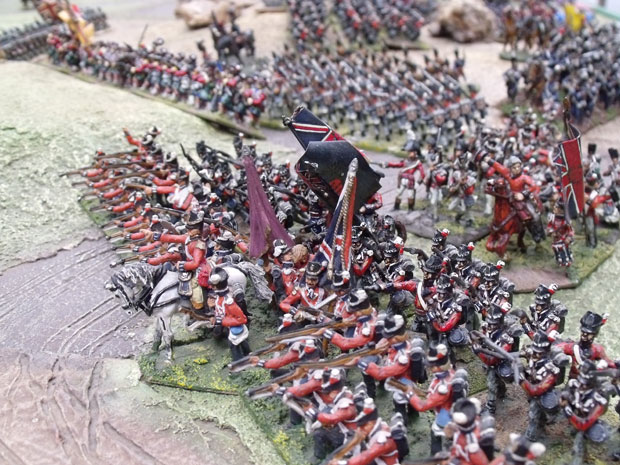
British defence

British infantry in the Allied defence line.

The French withdrew due to pressure on their flanks by an advance of the British line pouring volleys into the regrouping French infantry. The advance of the British infantry was stopped by the presence of another regiment of French Dragoons.
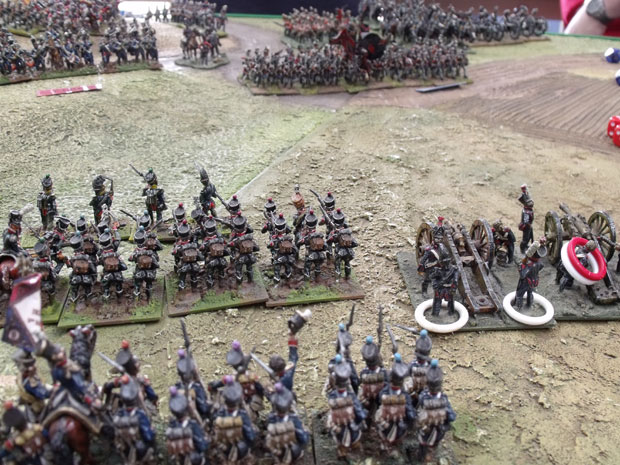
The exchange of fire was fierce!

The exchange of fire was dramatic, this french battery of D’Erlon’s corps was severely hit by the Allied defence line.

The battle rolled back and forth for the rest of the afternoon. The casualties mounting on both sides.
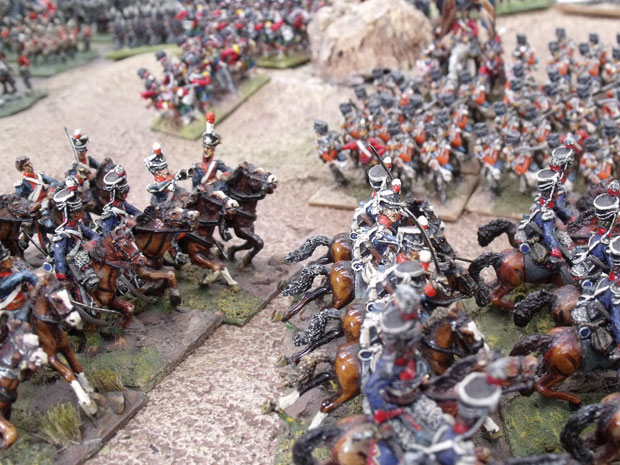
Moving to support the right flank

British Light Dragoons moving out to support the pressure on the allied right flank.

Sunday morning, saw the French looking to wrest the ridge from the British by taking up a 36″ redeployment of their troops, essentially this meant that during the historical second day of the battle, the 4th May, the players would be allowed to reposition their troops up to 36″, this hopefully simulates the re-organisation of the divisions during the “quiet” day preceding the renewal of hostilities.

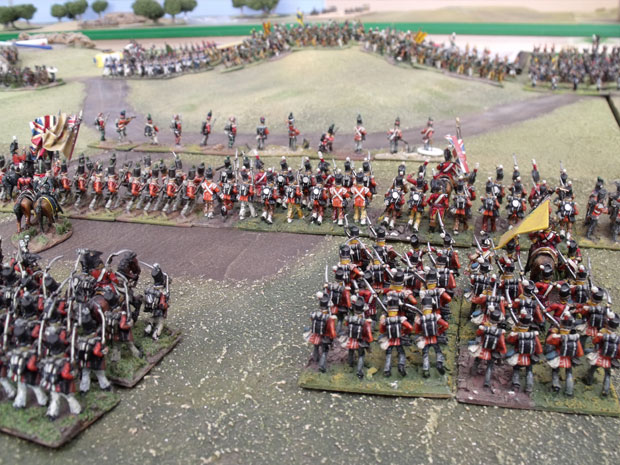
British line with Rifle skirmishers

The light division deployed on the Sunday to stop the advance of the French Corps of Loison.

The British stuck to their ridge, redeploying some of their battered divisions to the rear while the remaining intact ones stayed put and steeled themselves for the next round.

Loisons corps, which had been kept in reserve during Saturday was sept out to the oposite of the Allied right. The die was cast and the game afoot.
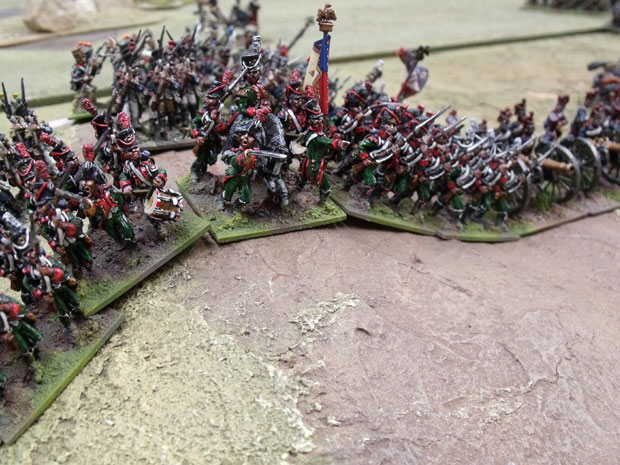
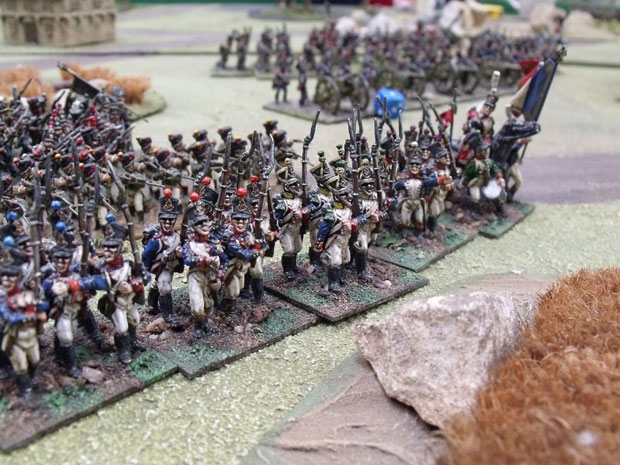
Chasseurs du Po. Part of Loisons Corps

Chasseurs du Po, lining out to exchange fire with the British Light Division.

The combined Grenadiers battalions in the french army drove foward toward Fuentes again, the British Line infantry opened up at long range and smashed the leading battalion with several volleys, two at long range, two more at effective and then one at short when the French charged! French columns from Drouets division driving either side of the village and encountering the supporting battalions, denying the holders of the vilage with support at a crucial moment. Credit to the troops of the combined Grenadiers, they got into the village, ejecting the defenders after the second round of combat.

The French immediately put a fresh Grenadier battalion into the village and braced themselves for the counter attack.

More of the allied defence

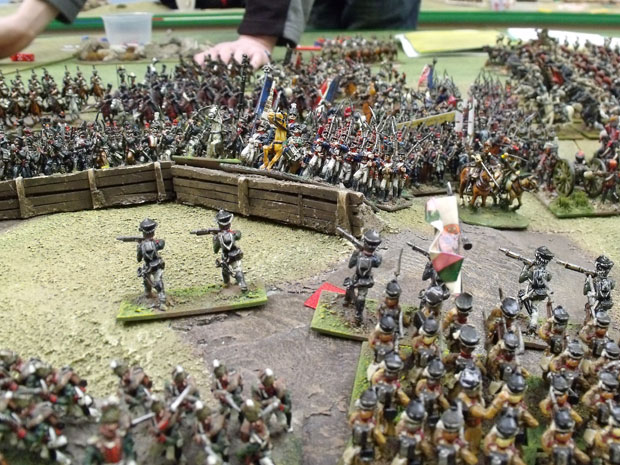
The lines of the Allied defence, a dash forward, followed by a quick wihdrawal to regain the safety of the allied ridge.

The Allied right saw the advance of Loison’s Corps and met it with the Light Division, Loison deployed his troops into line and exchanged volleys wth the redoubtable Craufurds boys, not too wise a decision you may think, but a brigade of French Light cavalry drew up on the right flank of the British rifles and appeared over a ridge in time to catch the green jackets in open order! The ensuing charge and volley at effective range emptied fifty percent of the saddles of the chasseurs, amazingly they thundered on, breaking through the rifles and on into the light infantry behind them cutting them down! They fell back after the breakthrough to regroup for another charge.
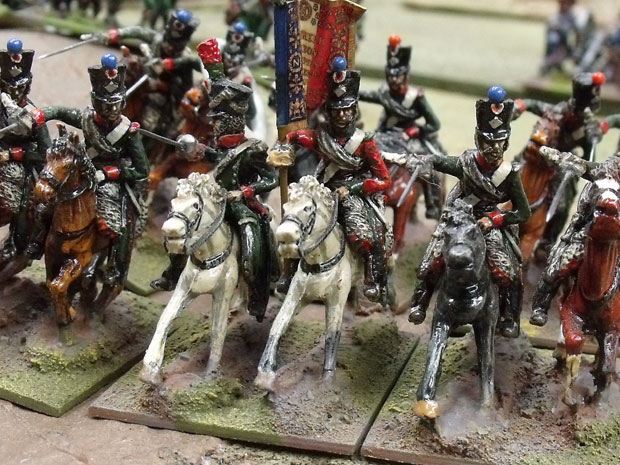
Charging in to cut down the Rifles

The light cavalry manoeuvred onto the flank of the Light Division and broke into a charge.

This galvanised Loison into pressing his attack, the British Light Division was made of stern stuff, they turned on the advancing French and gave ground gradually reaping a heavy toll.

Poles moving to the assault

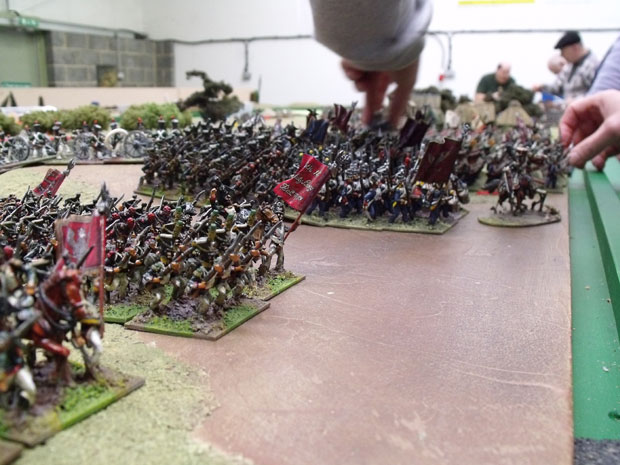
Polish infantry advancing to assault the British line of defence across the river Dos Casas.

At the village of Fuentes, the British re-launched the assault with the best part of a division,storming down on to the grenadiers garrisoning it. The French managed two volleys before the Oxfordshire and Devonshire regiments crashed into them, the melee was bloody with a total of seven battalions on the British side and five on the French. The Grenadiers crumbled and fled from the village taking their supports with them.

All in all the British had held the line and the French had been badly mauled! Historically the deployment of the troops had been quite different, The result was the same, but the British had lost a few more of their choice troops than Wellington managed to lose, the British Guards took few casualties and really didn’t get involved being held as a reserve that never got used, the French guard cavalry under Bessieres/Lepic didn’t move out all game, which could have been a great disappointment to the french players, yet as it turned out remained somewhat historical.

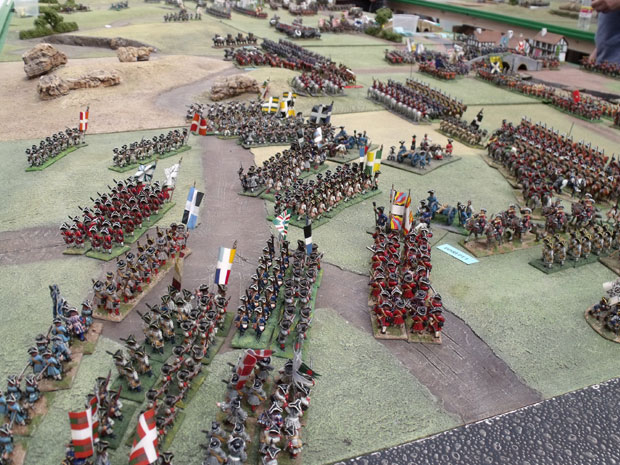
The Battle of Blenheim was our first Marlburian re-play at the Wargames Holiday Centre. I was quite excited at the prospect. The test games had offered a smooth playable game with a hell of a lot of accuracy. I couldn’t wait.

The battlefield was laid out in detail, the Nebel Stream, the villages of Blenheim, Oberglau and Unterglau were all in place. All we needed was a team of guys to play the parts of the commanders.

The view of the field from the river Danube

Taken early Sunday morning, the view of the battle from the river Danube, Blenheim is in the foreground.

This weekend proved to be a little special, one of the team members had been away from the hobby for over thirty years and was a little concerned that he may need a bit more experience in gaming before coming along. He was the first person to turn up, so I went through some of the basics of the rules (thankfully he is quite experienced in the period so all the concepts were readily accepted and appreciated). We set about writing the tiles out for the various regiments. Once all the tiles were written it was time to decide on the strategy to win the day.

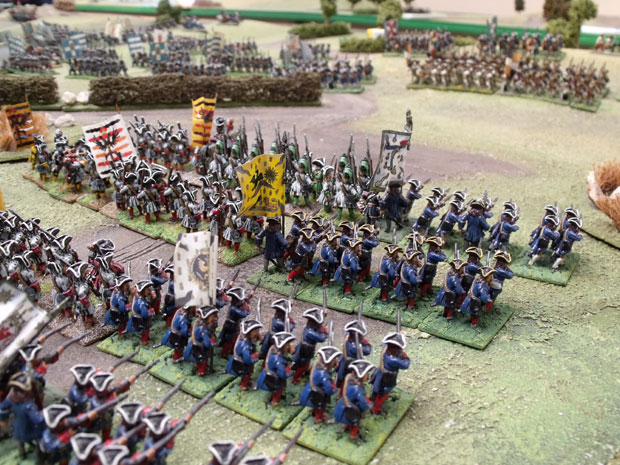
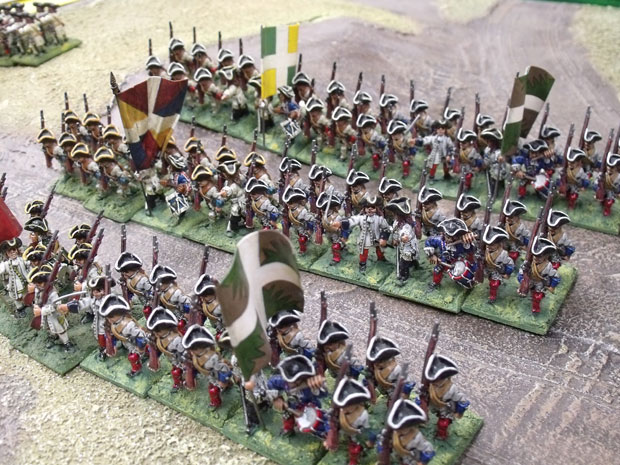
The French infantry take position.

The French infantry manoeuvre into position to hold the line west of Blenheim.

The British and their allies deployed as they were historically, Cutts deployed in front of Blenheim, Ingoldsby, Blood, Orkney and Churchill in the Centre, supported by Bulow and Rantzau with their respective cavalry formations, on the allied right Eugene of Savoy deployed with a mix of Swabian, German, Dutch and Prussian troops.

Deployment across the Nebel

Cutt’s brigade deploys in force over the Nebel stream.

The French were restricted in their deployment, Tallard and Clerambault deployed behind and in and around Blenheim. The French Cavalry held the Centre while the Elector of Bavaria held the French left flank opposite Eugene of Savoy.

The French manoeuvre to keep the line.

The French under Marshal Tallard look to replace their cavalry in the battle line.

The first turn saw the British and Hanoverian Cavalry under Rantzau and Cutts advance toward the Nebel to drop Fascines into the stream to help get their infantry across. The artillery deployed opposite Blenheim and in the centre and opened fire.

The stand off with the French Gendarmes

Cutt’s brigade is halted by the repeated charges of the French Gendarmes.

The French, roused from their camps were a little slow to get going, but once the activity of the Allies in their crossing of the Nebel was appreciated their cavalry swarmed forward to hinder the crossing of the stream.

Swabian advance over the bridge on the Nebel.

Swabian foot advance early in the battle, using a bridge to deploy quickly across the Nebel Stream.

The cavalry on the allied right wing under Eugene galloped forward in an attempt to drive the supporting troops back from around Oberglau and the woods surrounding it. The Austrian Cuirassier under the Prince of Hanover charged into the Bavarian Carabinier on the far right of Eugene’s position. They were met at the halt and received a volley at short range from the pistols of the Carabiniers. The resulting melee saw the Cuirassier retire to re-group.

Bavarian Cavalry move to engage

Bavarian cavalry move to engage Prince Eugenes forces, early in the battle.

A battalion of the Bavarian Lieb Guard were in the village of Oberglau and they prepared their position in readiness for the impending assault. The Saxon Garde obliged and fired a volley at effective range and then charged into the village. The brave Bavarians were facing out of an adjacent side of the village and could not fire a volley at these chargers, in the melee they held on though and the Saxons had to retire. Three times the Saxons charged back into the village and three times they were repulsed. After a while the Bavarians re-inforced the village with a couple of regiments of Bavarian line.

Bavarian moves to Obrglau

Bavarian infantry move into Oberglau to support the 3rd Lieb Battalion.

Surely it would be impossible now.

Austrian Hussars from Eugenes wing

Austrian Hussars emerge from the woods on the flank of the Bavarians, looking to break the deadlock..

Meanwhile over on the French right in Blenheim, Clerambault panicked and threw four more battalions into Blenheim, much to the annoyance of their commander. The rest of the force however managed to by pass the village and took up position on the high ground just opposite the Nebel stream, where Cutts brigade was crossing.

French in Blenheim

The French heavily ensconced within the streets of Blenheim.

The French cavalry had dashed forward to engage any troops crossing the Nebel, which slowed down the British and Hanoverians deployment somewhat from in front of Blenheim toward the centre of the battle near the village of Unterglau, the whole area was cautiously advancing.

Crossing the Nebel

Cutt’s Brigade begins it’s advance.

The Hessians and Palatinate troops rolled forward however, they were not impeded by the stream so much to their front, allowing a free movement, driving volley after volley into the French cavalry that had looked to delay them.

Germans of Ingoldsbys command

Ingoldsby’s German’s push on, firing repeated volleys in an effort to clear the French cavalry.

Marlborough was everywhere urging his troops on!

The reserve of Bulow and Rantzau awaited their moment, positioned behind the main Allied army. Cutts was making slow progress and the crossing of the Nebel caused a certain amount of disruption. Most of the brigade was across the stream now, but to little gain as the French infantry were now replacing their cavalry in the line and the exchange of volleys picked up a pace. Orkney and Ingoldsby took their place in the line linking up Cutts brigade with Eugene’s wing.

Engaging the Bavarian foot

Prince Eugene’s troops move in to support the attack on Oberglau, these troops tied up a lot of the support going to Oberglau.

The British and Hanoverian infantry of Cutts Brigade formed lines of battle three and four battalions deep and stepped forward. On their right came Orkneys British Battalions and then Ingoldsby’s Hessians and Palatinates, to their right were the Saxons, Swabians, Prussians and Dutch of Eugenes force.

The view from Eugenes wing

The view from Eugenes wing.

The French Horse, Cuirassier du Roi and Gendarmes took up position to further delay the advance and began exchanging shots with the advancing lines. They really needed to delay the advancing British to allow their infantry to deploy.

The Hanoverians, supported by a battalion of the British Guards moved on Blenheim, another two French Battalions were fed into Blenheim. The volleys erupted all along the line.

The British deploy at Blenheim

The British and Hanoverians deploy before Blenheim.

Over on the Electors front, Oberglau was hotly contested, there were now three battalions in the village and the Prussians and Saxons were taking a heavy toll on them. Still they hung on though. The whirling mass of cavalry on the far flank of this part of the battlefield continued to charge, take fire and then retire, regroup and go again! Eugenes troops were having a tough time in breaking the Bavarian wing.

The Gemans of Eugenes wing advance,

The Germans of Prince Eugene advancing into the Maelstrom!

Toward late afternoon it was decided to commit Cutts cavalry regiments to the centre and try to turn the Bavarian right, this would cause a hole to appear, the only troops linking the French with the Bavarians were the Bavarian cavalry

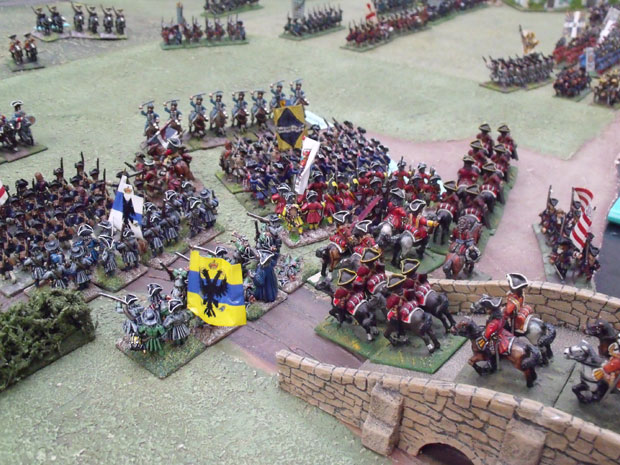
Cutt's cavalry deploys in support of Ingoldsby

The British horse from Cutt’s brigade deploys in support of Ingoldsby, they would be smashing into the Bavarian flank shortly.

Time for the pub now though, a well earned pint and a meal while the finer points of the day were discussed.

Sunday morning, bright eyed and bushy tailed the swords were picked up again and the Allies renewed their attack. The artillery bombardment of Blenheim was proving useless, so it was agreed that the Hanoverians would have to drive the French out, the down side was that their were a lot of French in the village now, so it was going to be tough work.

Early Sunday morning

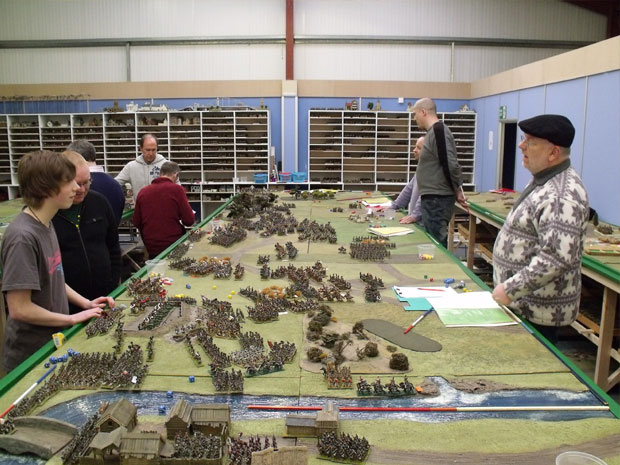
A view of the battlefield early on the Sunday morning, just before the commanders arrived.

Cutts cavalry reached a bridge across the Nebel and began crossing, this wasn’t unnoticed by the French high command and they began extricating their own cavalry and moving to engage this new threat.

Rantzau was also moved up to support the central advance, the Danish Cuirassier eyeing the new formations of French infantry and artillery. British Horse moved up to the stream and began to cross.

Along the whole front the volleys started again, Frenchmen began to fall at an alarming rate as the British began closing the distance to a short range contest! Some of the battalions proved a little eager and settled into firefights at long and effective range and only the commanders themselves could resolve the problem, urging the troops to close the range.

The Duel begins

The British lines close with the French into short range, a lot of casualties were given and receivd throughout this action, the lines being withdrawn and replaced by fresh ones all to no avail.

The Bavarians had began something of a counter attack, the casualty rate had proved quite high though, even to the point where some of their Land (militia) regiments were now nearing the front lines. The cavalry battle on the very far wing here continued a pace, all the cavalry had now been in action and suffered thirty to forty percent casualties.

Cutt’s cavalry had made the crossing and charged into the Bavarian cavalry holding the centre, if this was lost the French would be split from the Bavarian allies, the flanks would be exposed and all could be lost. The Bavarians stood their ground, gave fire and held the British Horse off! The British retired, regrouped and looked to assault again.

In the Centre of the battlefield the main French and British armies stood toe to toe, mostly at short range and blew great swathes of the battalions down! Nothing gave though, the Wing command of Eugene and the Elector had worn each other down, the Bavarians keeping their position and the upper hand.

The British infantry of Cutt’s brigade tried several attempts at charging the French line only to be repulsed, while the Cavalry of Cutt’s brigade again charged the Bavarian cavalry, looking to drive a wedge between the two armies. Six regiments of British Horse and Dragoon charged again and again, but the stalwart Bavarians held their ground.
The Danish Cuirassier and British Horse filed past the Battle lines of the British infantry and deployed into line. Fire from the French emptied a few saddles, but it proved ineffective at long range. When they were ready they charged forward into the Guns and French Battalions, the fire was poor from the French, only one or two figures were lost and the cavalry smashed into the French, cutting one French battalion down to a stand, they broke and ran! The second line of infantry remained stalwart though. The second wave of cavalry smashed into the line, a hammer blow to break the back of the French battle line, the fire was better this time, one regiment of Horse losing forty percent of it’s men. On they went, into the French infantry, in the ensuing melee the second line of Frenchmen fared better than the first, they were fresher I suppose and the cavalry fell back and looked to reform.

British Horse supports their Danish Cuirassier friends

The British horse from Rantzau’s command advance in support of the charging Danish Cuirassier.

On the Allied far left in front of Blenheim the British and Hanoverians were now in position to push forward on to Blenheim. The French held their fire until the last minute and shot away twenty five percent of the front battalions, still the British advanced and returned the volley. Then they charged, into the streets of Blenheim the hand to hand fighting was bloody. The British looked to their Hanoverian counterparts for support but the luckless Germans broke and fled, leaving the British battalions alone and outnumbered.

The assault on Blenheim

The British and Hanoverian infantry charge into the streets of Blenheim, after some bitter fighting the Hanoverians broke, the british were left with no other option than to retire.

Eventually the British had to retire from the village, they reformed ready for another assault but it was felt that the Allies had lost their chance, the battle was lost and the army began to retire in good order. The French had held the field, the Bavarians had held but suffered huge casualties, I suppose that this would have taken them out of future campaigning. The British and Allied cavalry was still in good condition

Another day perhaps.

Well the second day of Salamanca has concluded with a very grisly and bloody draw! Over to the far west of the Allied line the French Light cavalry division managed a sweeping outflank manoeuvre, decimating the Spanish battalions supporting the end of the ridge.

Spanish Battalion

One of our Connoisseur Spanish Battalions.

In the town of Los Arapile the British Garrison continued to hold out, sending the opposing French division back on to it’s starting lines. In the centre of the battlefield the British Divisions of Clinton and Hope took the initiative. After seeing their left flank become exposed, the French division assaulting the ridge retired for fear of attacks from the British cavalry. On seeing them falling back the British commander ordered a general advance all along the ridge. This action would take some of the pressure off of the British Guards division that had borne the brunt of the fighting the day before.

French advance

The French renew their advance.

The French divisions facing the Guards at the apex of the “L” renewed their assaults, trading volleys with the British Division that had moved in to replace the Guards. Over on the Allied left, Altens light division entered pushed forward to blast the French defenders of the dried riverbed. While Leith’s division pressed home a more determined assault in an effort to carry the position at the very end of the French line North of Calvarossa de Ariba.

The renewed assault

The Greater Arapile can just be made out in the left background, while the French in the foreground assault the British apex of the “L”.

There were fresh attempts from Soult’s light cavalry to break the beleaguered British infantry, but the Light Dragoons of the Kings German Legion drove them back on to the reserve divisions.

The top of the Greater Arapile

The twelve pound battery from Foy’s division dominates the Greater Arapile “.

Now that the Allies had finally begun to assault the tired French formations, it was the turn of the French to line out and pour volleys into the advancing redcoats! The French cavalry on the far right of the Allied line managed to get right around behind the Allied ridge, with no cavalry left in a functional state, three regiments of light cavalry had a free hand to terrorise the Spanish and Portuguese on this flank. Anson’s division of Light Cavalry marched the length of the ridge to deal with this threat.

Clinton and Hope's divisions

The British Divisions of Clinton and Hope advance down on to the plain to the south east of Los Arapile, previously held by the French.

The divisions of Clinton and Hope formed line of battle in effective range of the new French defensive line and traded volleys for over two hours! The troops on the apex began to feel the strain, two battalions of the Light Division were nearly caught by the Chasseurs of Soult’s division, only just evading their sabres by evading back through their own lines.

Part of the light division

Part of the Light Division moving into position.

Leith and the division opposing him wore each other into a bloody pulp, over fifty per cent of the divisions on both sides becoming casualties.

The fight for the stream

The fight for the riverbed hots up, with the French artillery suffering heavily, volleys begin to be exchanged across the stream.

By the end of the day, the British forces were beginning to give ground back toward their strating points leaving the French who had effectively suffered over thirty percent casualties, to retire.

Down on to the Plain

The view from the plain just to the south east of the Lesser Arapile, the French can just be made out forming battle lines in the distance.

The British were then in a position to withdraw back on to their supply lines and escape.

So a bloody draw was concluded.

A great weekend, lots of fun and a very different type of Napoleonic battle without the real battle cavalry that normally thunders upon the central European battlefields. The infantry play a far greater role, with volley fire playing a far more significant part.

I can’t wait for Fuentes de Onoro!

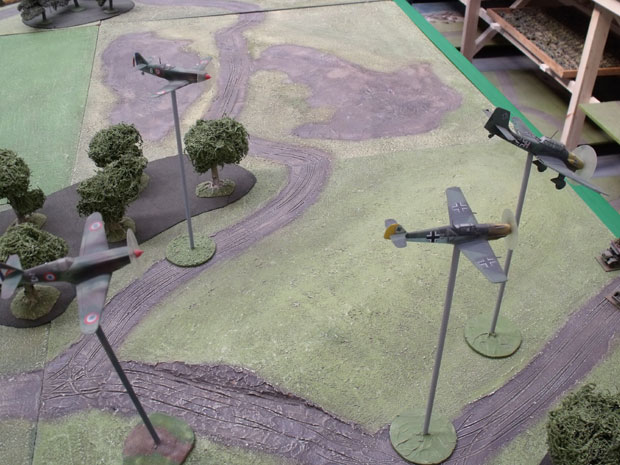
Play testing the Flames of War proved to be a breeze, we made some amendments along the way. We decided that the aircraft needed a little something, so we decided that when a flight arrived from the Germans, we rolled to intercept as normal.

Let's get outta here, Schnell!

Here is an example of two French Fighters turning up to engage two German aircraft.

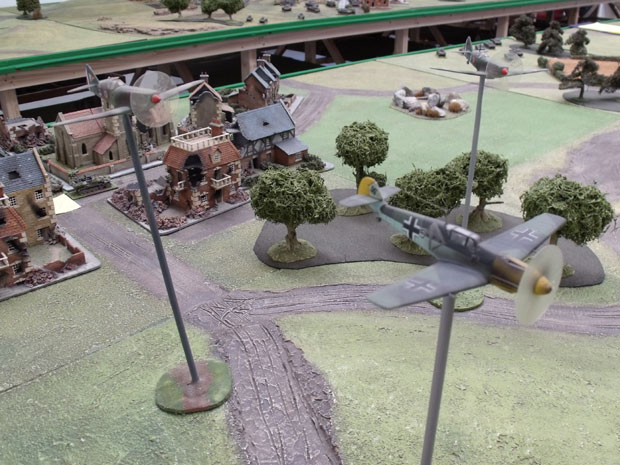
(You’ll notice from the photos that there are German fighters in the ground attack, this was some poetic licence on our part, they all performed as if they were Stukas for the ground attack, it just gaveus an excellent opportunity to mix the two for the pictures!)

Spitfires covering the advance ofthe British Armour.

Here is an example of two Spitfires patrolling after shooting down a lone Stuka flight.

If there was an interception this was then rolled as if it was a flight attacking, so the aircraft dice were rolled, the result being one to three interception aircraft.

French Interception

Two French fighters look to intercept a German Flight on ground attack.

The Allied player then rolled to hit using the skill of the air support, then a fire power test to finally destroy an enemy plane. So two planes arrive, two dice for the allies needing a 4+. Any hits were then converted to kills on a successful fire power test.

This reduced the number of German planes attempting the bombing run.

Preparing for the assault

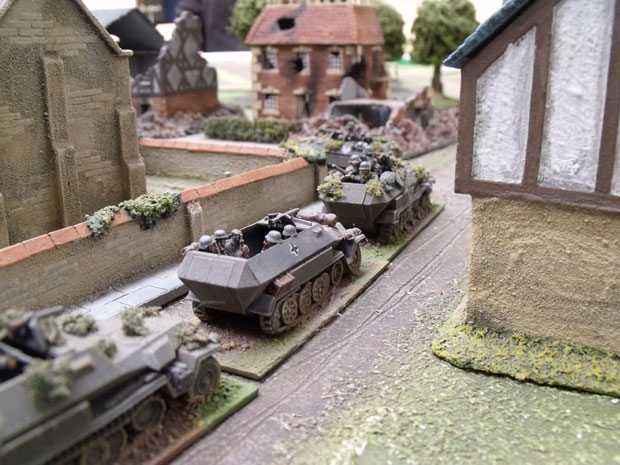
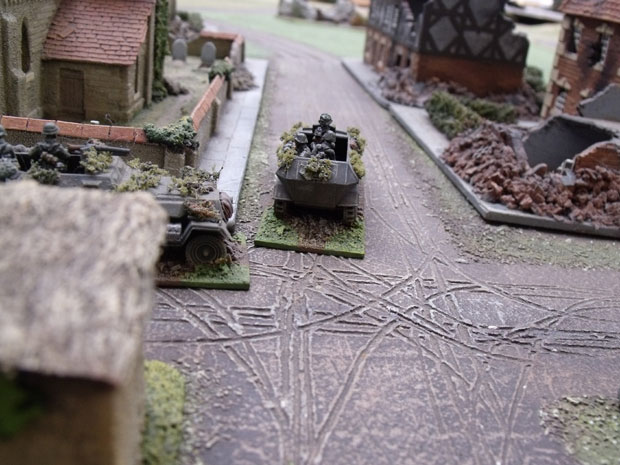
German Gepanzerte troops move into a French village.

We also looked at Morale, one of the challenges for a game running for over two days is the fact that units may literally disappear when they are sufficiently damaged. This was diluted somewhat with a rule offering that any unit requiring a morale test would test as normal.

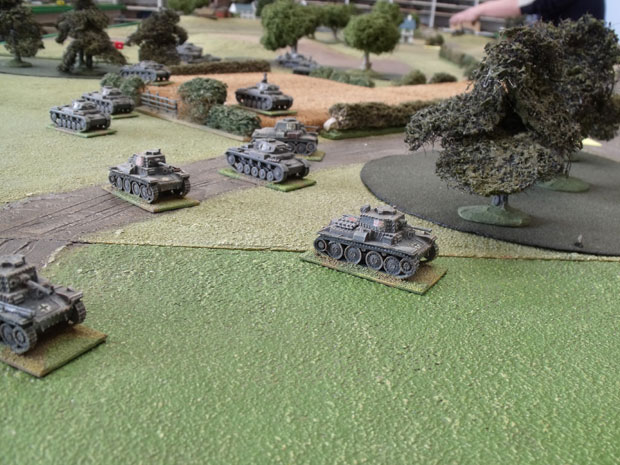
Panzer Division moving out to the assault.

German Panzer division counterattacking.

If there was a failure, the unit would double away in rout from the enemy causing the test.

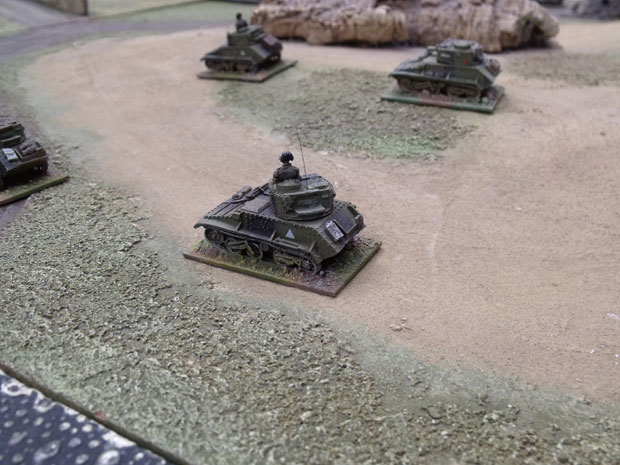
Vickers Mk VI

Mk Vi Vickers scouting ahead.

As this is doubling, all rules for doubling would apply. Senior commands to the unit routing could then rally the unit in the morale phase of the turn in which they had routed, routs being conducted immediately and rallies being in the following “start” step. If the unit rallied infantry would then go to “pinned”, armour would go to “Bailed out”.

Moving into position

German infantry attached to 7th Panzer division moving into position.

More to come!

Recently at the Wargames Holiday Centre we’ve been working on our Marlburian period rules. These have been around for over twenty years and were drafted by my good friend Mike Ingham. Mike had a keen interest in the wars around this time in history and as a result decided to add this to the Wargames Holiday itinerary.

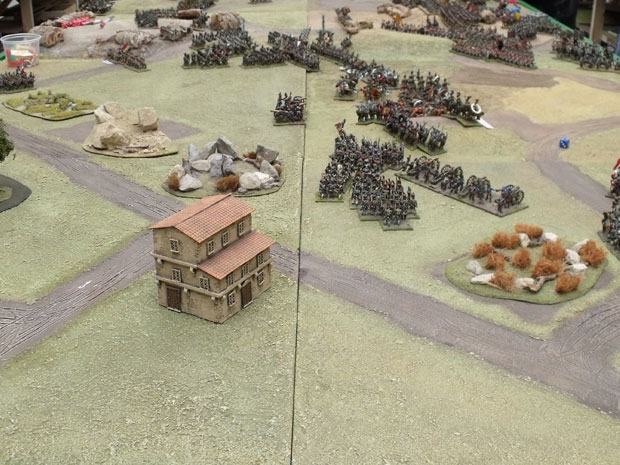
The Battlefield of Blenheim

The battlefield of Blenheim as the battle gets under way

Now with over six thousand figures in the collection we can quite comfortably offer the key battles surrounding the period, our choice for this year are Blenheim, Malplaquet, Oudenarde and Ramillies.

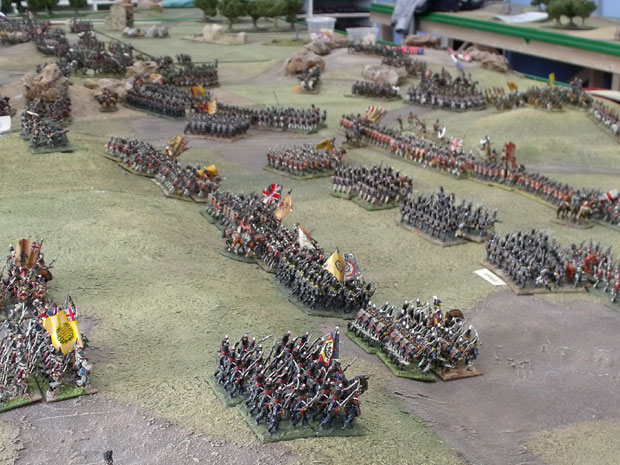
View from the Allied position

A view of the battlefield from the Allied position

During the last month we took an opportunity to work on these rules and hopefully improve on them. At present they are extremely playable but would they fully reflect the period. There is a lot of “formation depth” in this period, with Cavalry and infantry providing direct support for each other. This differs to the rules regarding Napoleonics, where the cavalry are not quite so affected by the movements of the infantry and vice versa.

Leib Battalions in one of the Villages.

Bavarian Leib Battalion takes up residence

Manoeuvre is fairly straight forward, troops can form column, a single stand wide by four or five deep, cavalry form double lines, line or single base wide column. Movement ranges depend on the formation.

Swabian Foot and their medium artillery.

Swabian regiments and their artillery support.

Our firing mechanics are quite straight forward, all stands roll one dice, the range determines the required “to hit” score on the die. Melee follows a similar mechanic with a die rolled for each stand in the melee. If the target is in hard cover, wearing cuirass or in open order (artillery) then a saving throw is allowed, generally a “six” or in the case of hard cover a “five or a six”, so fairly simple.

Swiss Mercenaries take up position in Hard cover.

A Swiss Mercenary battalion taking advantage of hard cover.

The troops of the period in our rules have national characteristics to take into consideration, for instance, the British, Dutch and Danish are “shock” cavalry, their infantry also have a better fire discipline and therefore will roll an additional die in firing. The other nationalities mounted troops are what we term “Firing Cavalry”. The shock cavalry have no firing capability, but have the potential to deliver a lot more damage on the first round of combat. The Firing cavalry have a shooting capability, denoted in the name and will fight less effectively in the first round of a melee with Shock cavalry. The casualties are removed as a base becomes marked off on the casualty charts, this is two figures in cavalry regiments and four in infantry regiments. The reduction in bases obviously affecting the fighting capability of the unit.

British Horse en-masse!

Regiments of British Horse, shock cavalry forcing their way through the French centre.

Melee is similar to firing, range bands provide hits on four and over, or fives and over at long range becomes sixes. Cuirassier have a saving throw in melee of a six.

A Wing commander in the British Lines.

Placement of Commanders, be they Wing, Army or local, can really affect the stability of your formations.

The performance of units can be further reduced due to “Disruption”, this reduces the amount of dice rolled per regiment and the factors are gained through a variety of means. Units doubling for instance, crossing difficult terrain or having routed and rallying.

Bavarian foot advancing in line.

Bavarian Infantry regiments advancing in line.

All units have a Morale rating dependent on their class. Morale is tested using the loss of casualties, a base and friendly routs etc. adding pluses to your morale score, an average die score is then deducted with Generals and support providing reductions in your score. The result is compared to the Morale rating of the tester, if the number exceeds this, the unit becomes “Shaken” a further variance will see the unit rout.

French Infantry with their supporting battalions.

A French infantry battalion, with supporting ranks.

The game really flows well and is extremely playable. I hope to present some battle reports in the near future.

Well the opening shots havebeen fired and the French have stormed forward across the plains in front of the Russian positions. The French deployment has Junots Westphalians deployed North of the Kolocha River, opposite the Russian VI Corps, Ney’s III corp in front of the redoubt supported by Nansoutys I Cavalry Corp and Latour Maubourgs IV Cavalry corps. Davout linked up between the south of the Redoubt to the fleches supported by Montbruns II Cavalry Corps and Grouchys IV Cavalry Corps. South of this was Eugenes IV corp and coming into Utitsa from the south was Ponitatowski’s V corp.

From the South

A view from the southern end of the battlefield.

On the Russian side Tuchkovs III corps were defending the Utitsa area, North of them was VIII corps holding the fleches, supported by the Guard twelve pounder battery. North of this IV Corps took up position in and behind the redoubt. VI corps supported two battalions of Jaeger-Carabinier of the Guard in the Borodino village.

Borodino Village

Volley after volley into the Borodino village finally beat the Guards holding it.

Right from the off the French poured forward, the Poles dashed toward Utitsa as the opposition dug in within the confines of the village and surrounding area. The Italians crept through the Orchard to engage the village from the front.

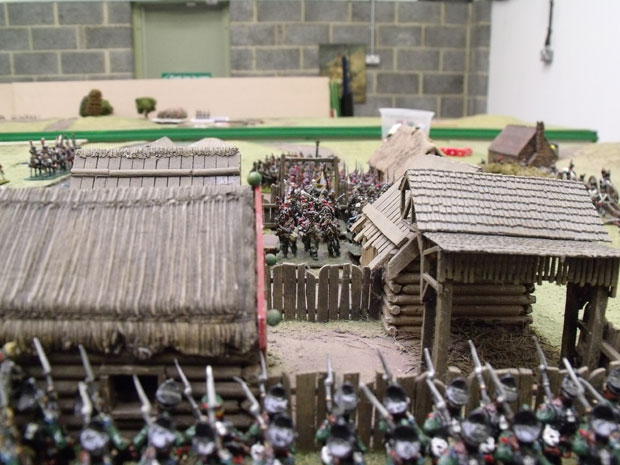
The Russians hold Utitsa

The new model of the village of Utitsa.

Along the whole front the Russian guns began to reap havoc among the cavalry regiments advancing across the plain. The Russian cavalry were held in reserve right up until they were needed, to maximise the casualties from the guns. The twelve Pounder battery in the redoubt blew seven casualties off a Wurzburg battalion in turn one and a further eleven in turn two.

Past Utitsa

Polish infantry stream past Utitsa to the South

As the fight wore on the French guns began picking gunners off, the French infantry managing to get up to effective range behind the cavalry screen. Once the screen was away though the guns knocked dozens of figures off! This wasn’t enough though and by turn twelve the fleches were in enemy hands, the villages of Utitsa and Borodino had fallen into French hands and the woods around Utitsa were being strongly contested.

The fleches cleared

The southern fleche finally saw it’s half battery retreat, leaving the dogged defence to the infantry.

The French III corps moved steadily on through ball, shell and canister up the slope in front of the Great Redoubt, dropping into the wolf pits to exchange shots with the battery, it was carnage.

The III corps assault

The French III Corps assault up the slope before the Great Redoubt.

Miraculously though the Wurttemburg 25th Division managed to get around the side of the redoubt, engaging the Russian division protecting the North flank of the earthwork and driving them back. It was at this point that Junots corps finally drove back the Guard from Borodino, and began contesting the far bank of the Kolocha river with volley fire, a battle they would inevitably win.
From the North of the battlefield

A view from the Northern end of the battlefield.

At this point, at 17.40 and after fifteen turns it was decided that the Russians had been beaten! So we put the figures back on the trays, re-wrote the tiles and we’ll start turn two again tomorrow having changed the sides around a little bit. If it’s as much fun as today, it’ll be great!

French Cuirass

Nansoutys I French Cavalry Corps

Another update tomorrow!